Achievements of the Unit
Achievements of the National Science, Technology and Innovation Plan Program at King Saud University during the period (2008 – March 2014)
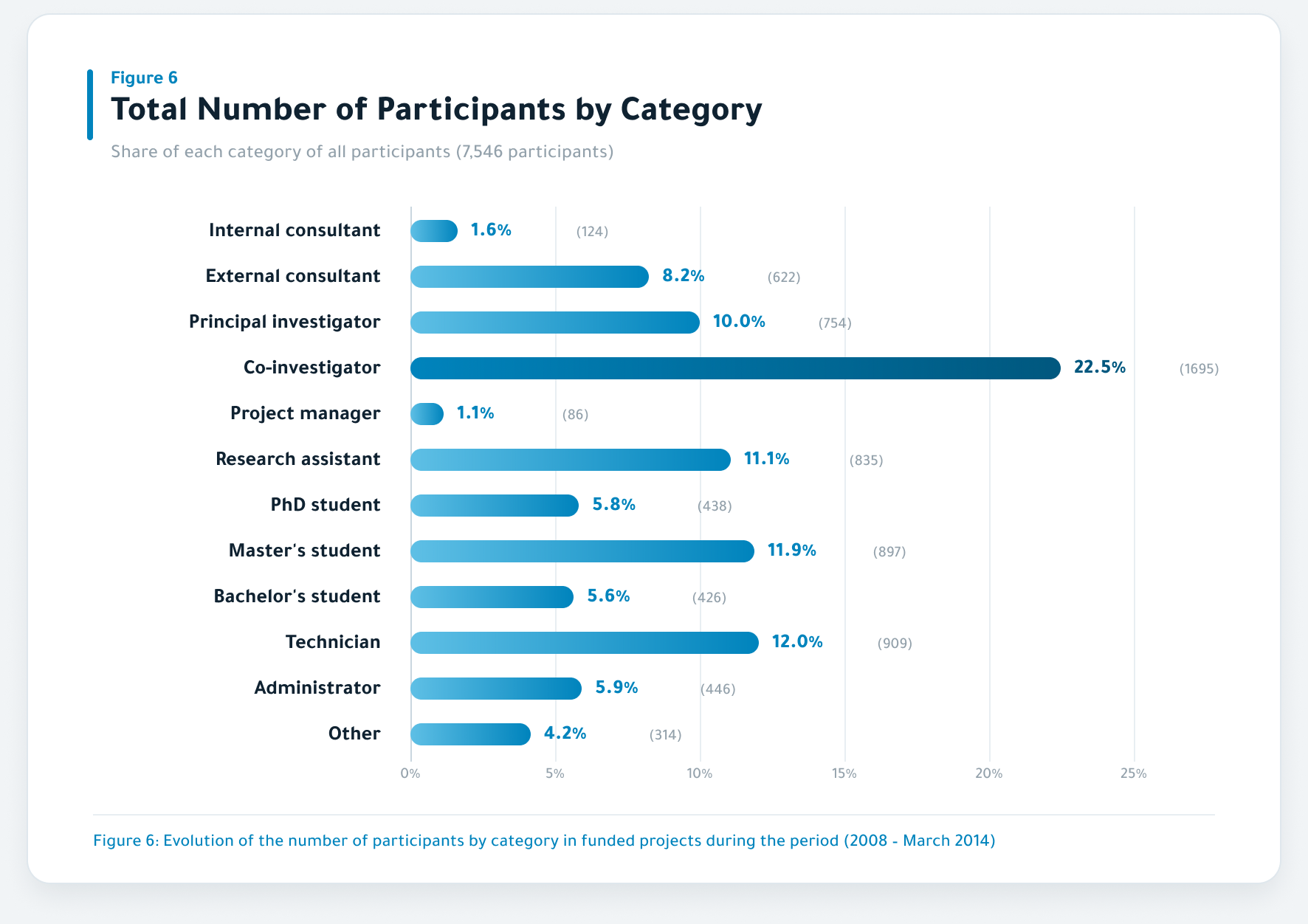
754 research projects for King Saud University were supported up to the March 2014 round, whose results reached the University this month, with a budget of 1,182 million riyals, in which 754 principal investigators, 1,695 co-investigators, 835 research assistants, 1,235 master’s and doctoral students, and 746 internal and external consultants took part.
This is in addition to the University’s participation in six operational projects, four of them health-related, with a budget of 100 million; a diabetes center with an amount of 52,000,000 riyals; the Science Oasis with a budget of 52,000,000 riyals; and the Aldhwayan Center for Technical Innovation with an amount of 50,000,000 riyals.
The supported projects of King Saud University during the period (2008 – March 2014)
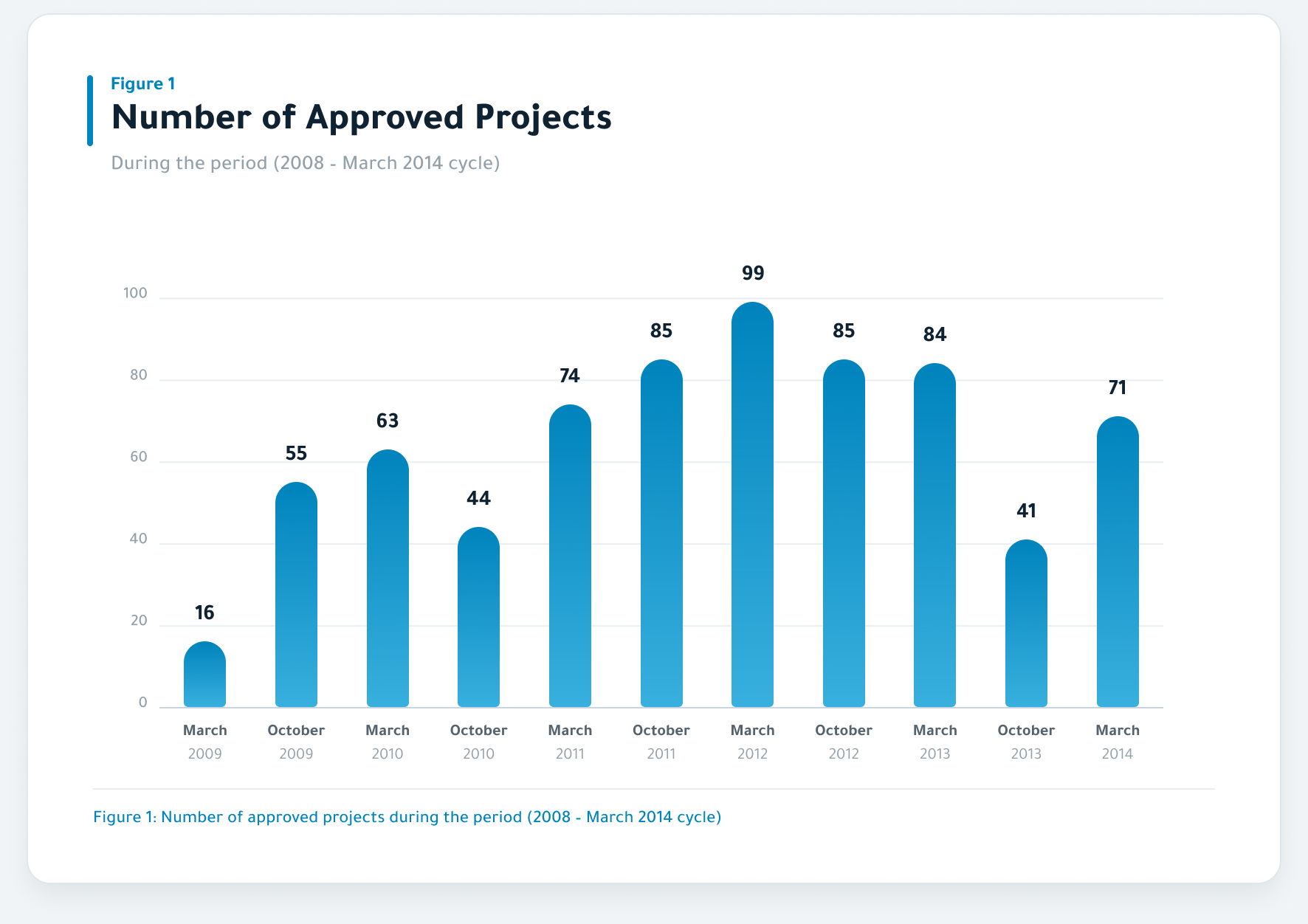
In order to increase the University’s contributions to the National Science, Technology and Innovation Plan, the program regularly undertakes many initiatives to introduce the research programs of the National Plan and their priorities. In addition to the means available at the University, and what is available for conducting a media campaign of announcements in the University newspaper, communication with the University’s researchers by email, and use of the program’s electronic portal which contains all of its activities, the program began organizing annual workshops in order to provide greater opportunity to learn about the research programs of the National Plan, the supported projects, and the mechanisms used in receiving and accepting research proposals. During the past year the program organized its first workshop, which saw a large turnout of researchers, which was reflected positively in the number of proposed projects in the rounds that followed the workshop, as shown in the following figure:
The number of supported projects is likewise primarily a result of the efforts made by the University through the Science and Technology Unit to improve the level of the submitted research. The measures taken by the University in this regard are as follows:
- A preliminary review of the research proposals by the program’s specialized committees, and communication with researchers to make the required amendments.
- Referring all research proposals to the committee charged with verifying the originality of the research using the electronic system (Turnitin), after which researchers are provided with a detailed report on this process.
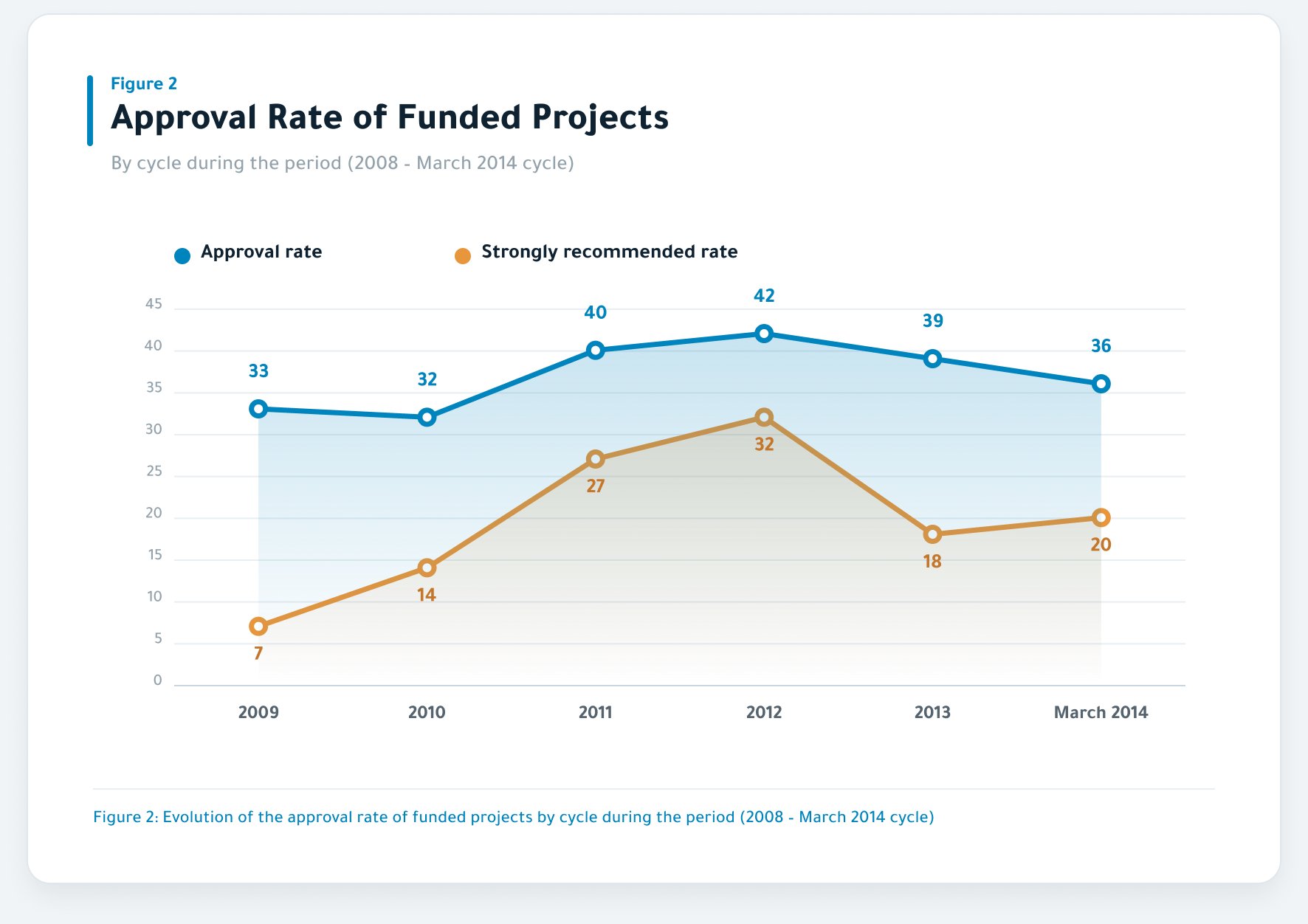
- Sending the research proposals to the “Edanz-Springer” institution, with which the program contracted last year for scientific review and language editing of the research proposals using the same review form used by the AAAS institution accredited by King Abdulaziz City for Science and Technology in external review; the Scientific Committee then communicates with researchers in order to make the required amendments. Note that this year the program contracted with Nature to review the proposed projects linguistically, in an effort to further improve the acceptance rate. This service has been discontinued for two years, and the National Plan program discussed in its latest meeting restoring the service, given its effect on the rate and quality of the accepted projects, as is clear from the following figure:
The accepted projects by technology
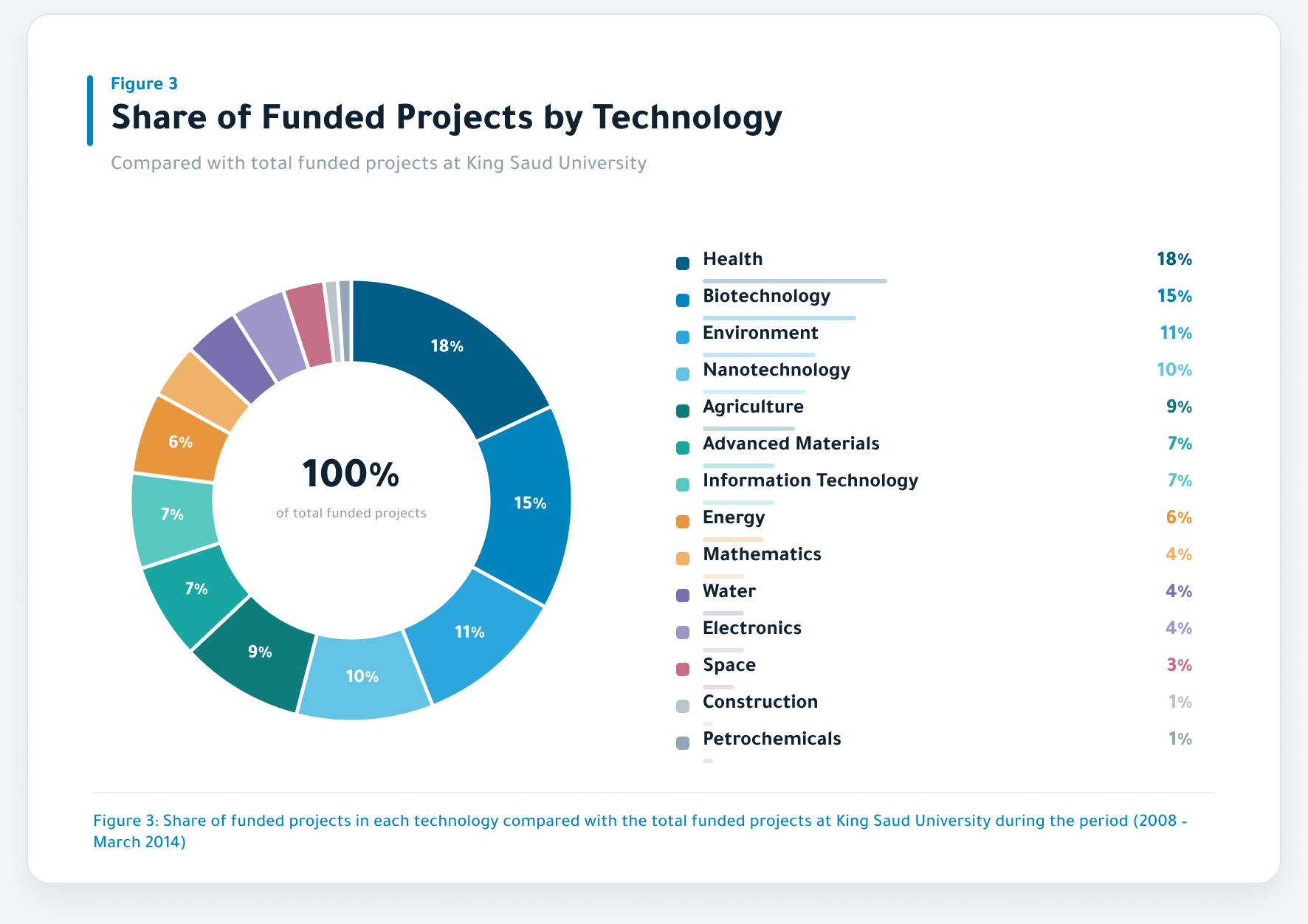
The following figure shows the percentage of supported projects for each technology compared with the total supported projects at King Saud University:
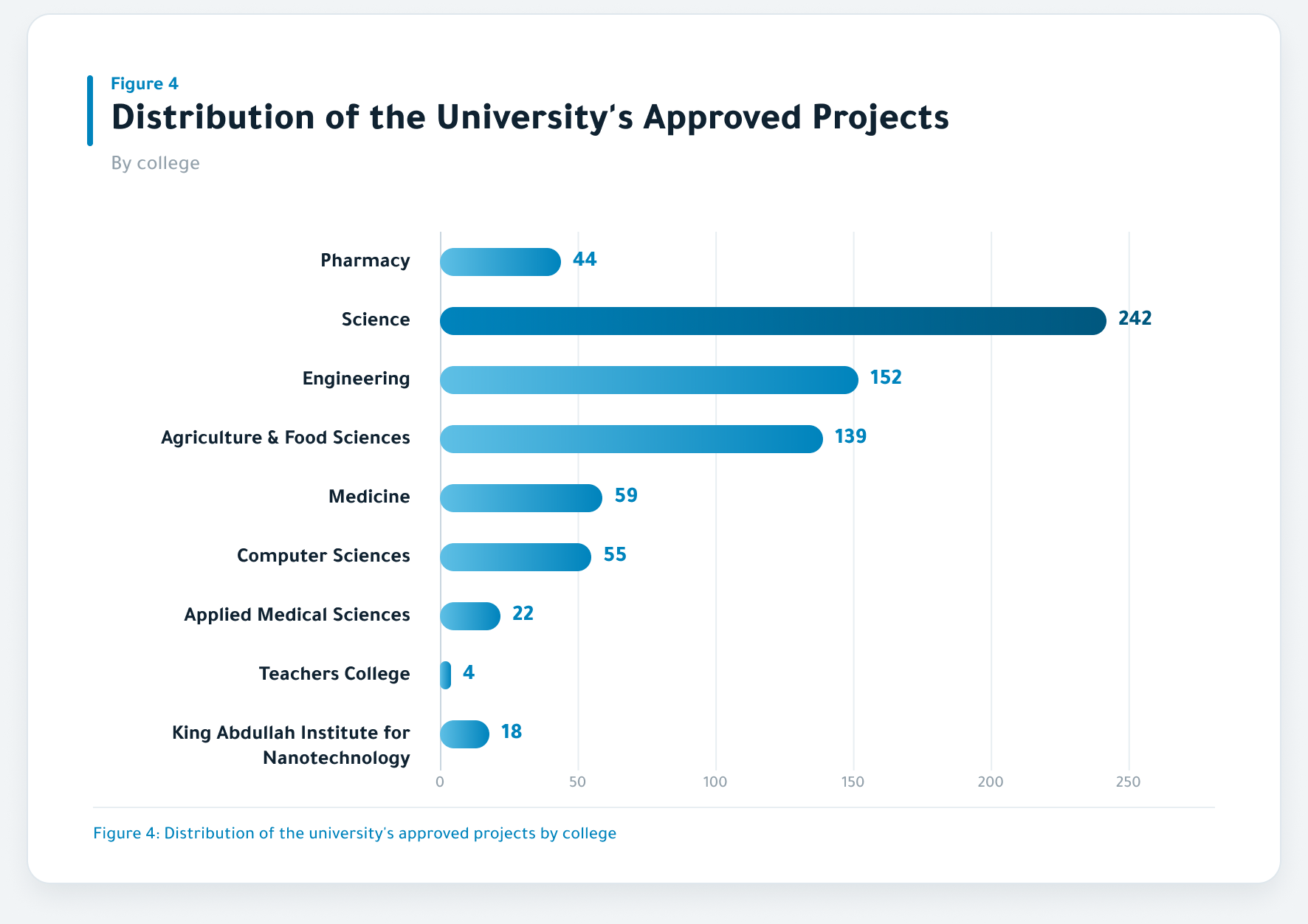
The colleges’ contributions to the National Plan
The following figure shows the contributions of the University’s various colleges to the projects of the National Plan, where the College of Science took the largest number of supported projects, followed by the College of Engineering, then Agriculture and Food Sciences, and so on:
Strengthening the infrastructure for scientific research at the University
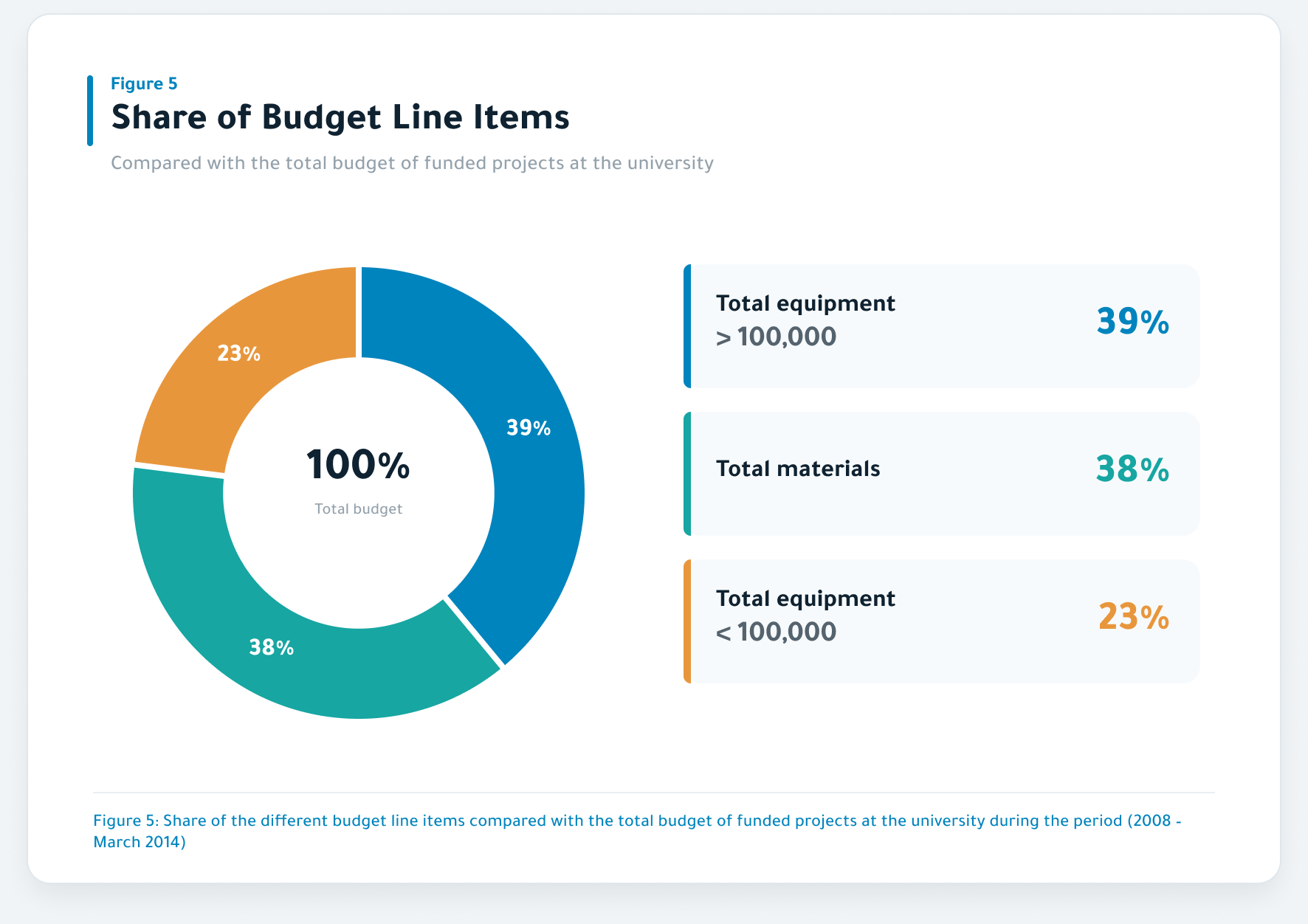
The National Plan set as a principal objective of the first five-year plan the establishment of an infrastructure dedicated to innovation in science and technology. The accepted projects at King Saud University contributed to achieving this objective through the equipment and materials acquired in this regard, which represent the highest proportion of the University’s budget, as the following figure shows:
The manpower participating in the projects of the Plan
The accepted projects of the University contributed to the growth in the number of researchers participating in the Plan from the various categories, and the number of students participating in the projects of the National Plan has seen notable growth from one round to the next. This is primarily a result of the fundamental condition set by King Abdulaziz City for Science and Technology, namely the necessity of at least one student participating in every research project, in addition to the importance the external review gives to the training element in its evaluation of the projects.
The Scientific Research and Technical Development Capabilities Program
The Scientific Research and Technical Development Capabilities Program, which includes health research, comprises five health centers at King Saud University within the sub-program dedicated to health research. Support for these centers continued during the year: the diabetes center received one million riyals, the autism center 500 thousand riyals, the liver center one million riyals, and the diabetes center 500 thousand riyals. Below is a brief account of these centers.
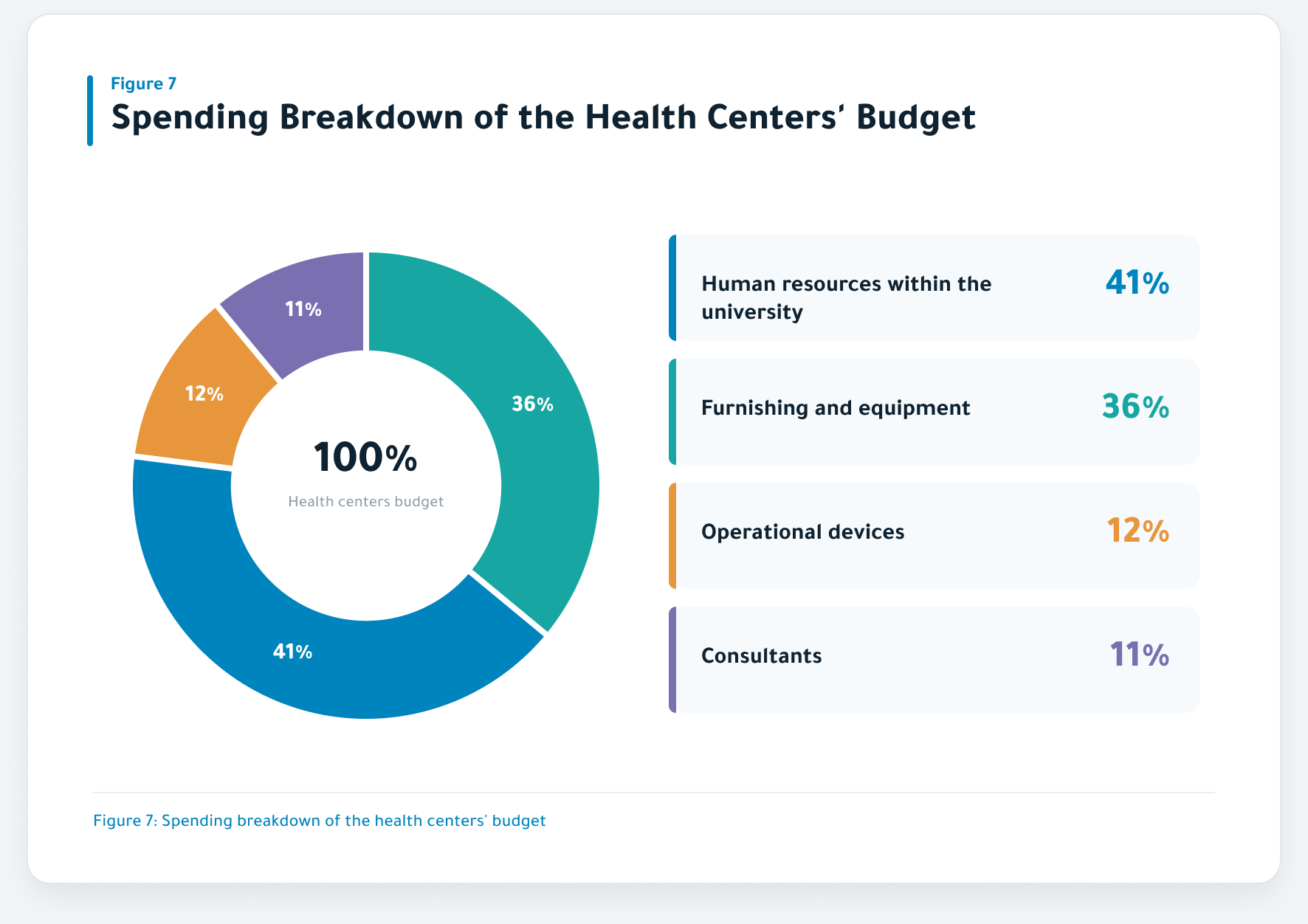
The following table shows the most important figures for health research, and below are the most important spending-item ratios of the health centers’ budget.
Scientific publishing and patents
The number of scientific papers derived from the advanced strategic technologies projects and published in internationally indexed journals (ISI) exceeded 1,200 scientific papers, and approximately 150 scientific papers were published within the proceedings of international conferences and workshops. In addition, 35 patents were registered.